Table of Contents
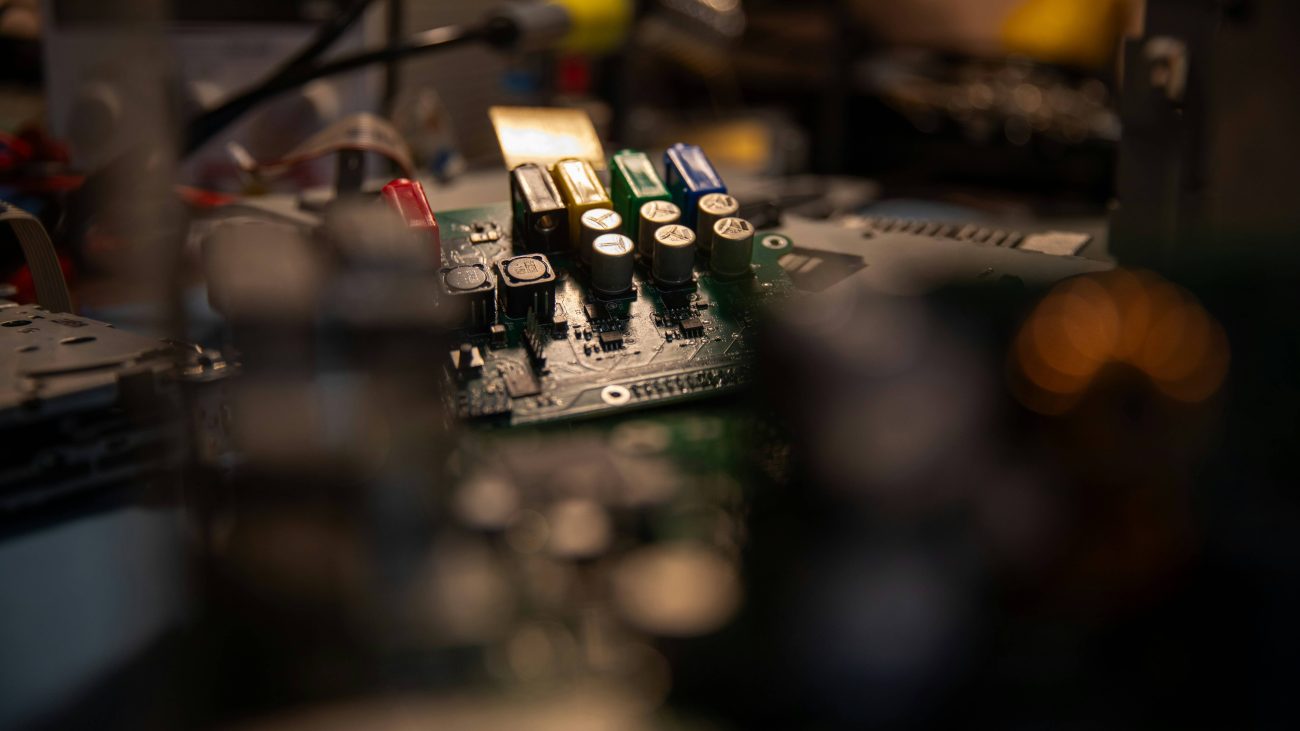
TogglePrinted circuit boards (PCBs) are the core component of contemporary electronics. They are a platform upon which electronic components may be mounted and interfaced. They may be divided into two board catagories: active components and passive components. They may be further divided according to purpose, mounting and packaging. Understanding these components is key to designing, fault-finding and repairing electronic circuits.
Active components
Passive components
In this blog we will examine the different kinds of electronic components on PCBs. We will discuss their function and the role that they play in the functioning of electronic devices.
Passive Electronic Components
Passive components are passive electronic components that do not require an external power source to operate. They primarily regulate the flow of electrical energy without control or amplification. The most common passive components are resistors, capacitors, inductors, and transformers.

Resistors
Resistors are among the most basic and ubiquitous PCB components. Resistors oppose the flow of electric current and thereby control voltage and current levels in a circuit. Resistors come in various forms, such as fixed resistors (carbon film, metal film, wire-wound) and variable resistors (potentiometers, rheostats). They are specified in ohms (Ω) for the resistance value and are used for voltage division, current limiting, and signal conditioning.

Capacitors
Capacitors store and release electrical energy in the form of an electric field. They consist of two conductive plates separated by a dielectric material. Capacitors are used in filtering, smoothing power supplies, coupling and decoupling signals, and timing. Some of the popular types include ceramic capacitors, electrolytic capacitors (polarized), and tantalum capacitance in farads (F), but most capacitors are in microfarads (μF) or picofarads (pF).

Inductors
Inductors store energy in a magnetic field as current flows through them. They resist current change and find wide applications in filtering, tuning circuits, and power supply regulation. Inductors are rated by core material (air core, ferrite core, iron core) and their inductance is measured in henries (H).

Transformers
Transformers consist of two or more coils of wire wound around a core and serve to step up or step down AC voltages. They isolate circuits from one another and are vital in power supplies, signal transmission, and impedance matching.

Active Components
Active electronic components differ from passive components in that they require an external power source to operate and can amplify, switch or modulate electrical signals. Examples include semiconductors such as diodes, transistors and integrated circuits (ICs).

Diodes
Diodes allow current to flow in one direction but not the other. They are used for rectification (AC to DC conversion), voltage regulation, and demodulation of signals. Some of the more common ones are:
- Rectifier Diodes – Used in power supplies.
- Zener Diodes – Provide voltage regulation for power supplies.
- Light-Emitting Diodes (LEDs) – Emit light when current is passed through them.
- Schottky Diodes – Low voltage drop, high speed switching application.

Transistors
Transistors are semiconductor devices used to amplify, switch and modulate signals. The main types are:
- Bipolar Junction Transistors (BJTs) – Consist of NPN or PNP junctions and are used in amplification.
- Field-Effect Transistors (FETs) – Include MOSFETs and JFETs and are used in high-efficiency switching applications.

Integrated Circuits (ICs)
Inductors store energy in a magnetic field as current flows through them. They resist current change and find wide applications in filtering, tuning circuits, and power supply regulation. Inductors are rated by core material (air core, ferrite core, iron core) and their inductance is measured in henries (H).
Electromechanical Components
Both electrical and mechanical in operation, these components are generally used for switching, connectivity, or motion control.

Switches and Relays
- witches – Manually or automatically switch current flow (e.g., toggle, push-button, DIP switches).
- Relays – Electrically operated switches used in high-power applications.
Connectors and Headers
- CB Connectors – Allow removable connections between external devices and PCBs (e.g., pin headers, USB, HDMI).
- Terminal Blocks – Provide secure connections for wiring power and signal transmission.
Motors and Actuators
- DC Motors – Provide electrical power to mechanical motion.
- Servo Motors – Provide precise angular control in robots.
- Solenoids – Linear electromagnetic actuators.
Sensors and Transducers
Sensors are physical change sensors (pressure, temperature, light) translated to an electrical format. Examples are:
- Temperature Sensors (RTDs, Thermistors, IC-based sensors).
- Light Sensors (Photodiodes, LDRs).
- Motion Sensors (PIR, accelerometers).
- Pressure Sensors (MEMS-based, Piezoelectric).

Transducers are devices that transfer one type of energy into another, e.g., speakers (electricity to sound) and microphones (sound to electricity).
Power Sources
PCBs draw power from a power source, and those are:
- Batteries (Lithium-ion, alkaline, NiMH).
- Power Supplies (AC-DC adapters, voltage regulators).
- Energy Harvesting Modules (Solar cells, piezoelectric generators).

PCB Components
There are devices which are specially intended to be integrated with PCBs:
- Oscillators & Crystal Resonators – These are used to supply clock signals to digital circuits.
- Fuses & Circuit Breakers – Overcurrent protection.
- Varistors & TVS Diodes – Voltage spike protection.
Common Electronic Components Name Abbreviations
|
Electronic Component |
Abbr. |
Electronic Component |
ABBR. |
|---|---|---|---|
|
Separable sub-assembly |
A |
Motor |
M |
|
Attentunator |
ATT |
Resistor |
R |
|
Battery |
BT |
Capacitor |
C |
|
Diode |
D |
Transistor |
Q |
|
Diode Bridge |
DB |
Oscillator |
OSC |
|
Delay line |
DL |
Jumper |
JP |
|
Inductor |
L |
Fuse |
F |
|
Transformer |
T |
Integrated circuit (IC) |
IC |
|
Connector |
J |
Voltage regulator |
VR |
|
Crystal |
XTAL |
Operational Amplifier |
OP-AMP |
How to Identify Electronic Components
Identifying the electrical and electronic components is an important part of PCB fabrication because if not done right, it can lead to various PCB Assembly defects that are not solveable. If you are new to PCB design and want to learn how to identify SMD components, these are several methods you can try.

- Visually Inspecting
The first step towards finding the PCB component is by looking at it thoroughly. This will give you an idea about the shape, size, and colors. Visually inspecting the electronic components will give you deeper insights, allowing you to get the maximum data.
- Leveraging Tools
If want to interpret the circuit component directly, you can use tools such as a multimeter, oscilloscope, and magnifying glass to note the values of inductance, resistances, and other parameters.
- BOM List
Using BOM lists and spec sheet models can also help in identifying the circuit components. BOM lists and spec sheets contain part numbers and information about voltage, current rating, operating temperatures, and humidity.
- Expert Consultation
The last method of identifying the electronic components is seeking help from FC PCBA. With our expert engineers and team, we will be able to identify the SMD components and provide you with alternate solutions if deemed necessary.
Conclusion
It is crucial in the design, fault tracing and improvement of electronic circuits to have an understanding of the different classes of electronic components of a PCB. From the passive components of capacitors and resistors to active devices such as ICs and transistors, all are helpful in some form towards making today's electronics work. Electromechanical components, sensors and power supplies open doors for PCBs further and make them pervasive in hardware as well as consumer electronics.
With this understanding of factors, engineers and hobbyists are able to design more efficient, creative and robust electronic systems. From creating a simple LED circuit to advanced microcontroller-based products, the ability to know how all components on a PCB impact each other leads to better performance and reliability.
FAQs
Why does my component get hot?
Overheating may be due to excessive current, wrong voltage, or a short circuit. Check ratings and connections.
What are electronic components?
Electronic components are basic elements used in electronic circuits to control the flow of electricity and perform specific functions.
What is a MOSFET, and how is it different from a transistor?
A MOSFET is a type of transistor optimized for switching/amplification with high efficiency.
What is the difference between analog and digital components?
- Analog components work with continuous signals (e.g., resistors, capacitors).
- Digital components work with discrete signals (e.g., microcontrollers, logic gates).
What are pull-up and pull-down resistors?
They ensure a stable logic state (high or low) in digital circuits to prevent floating inputs.